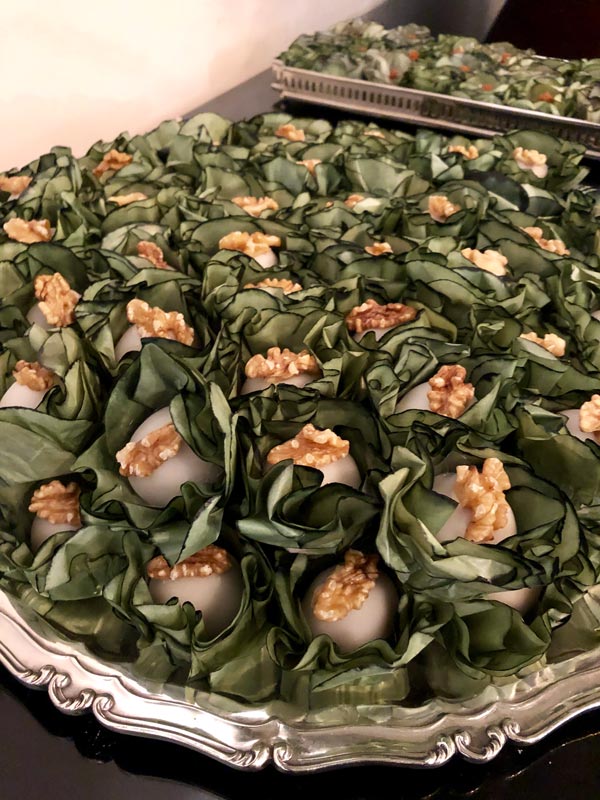
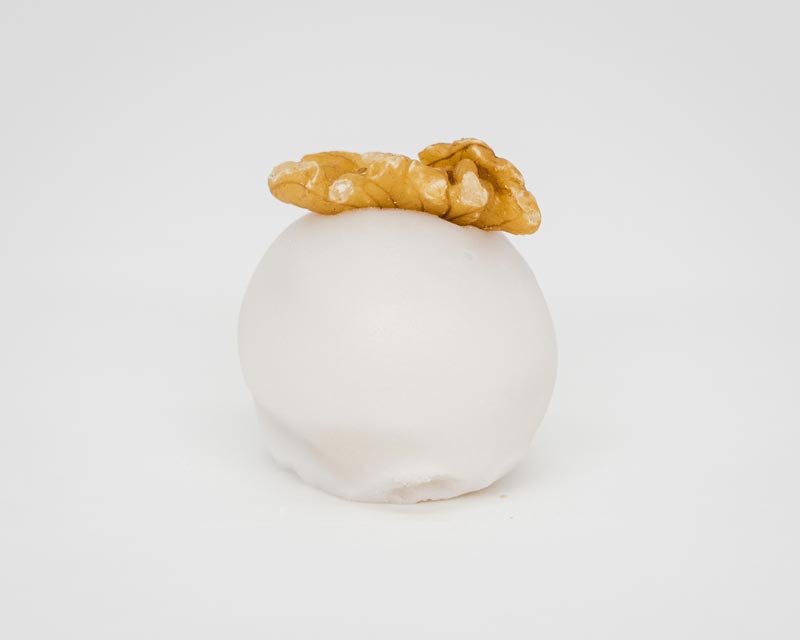
The walnut camafeu is one of the most traditional fine confections in Brazilian pastry. A fixture at weddings, baptisms, and formal celebrations for decades, it carries an air of sophistication that few confections can match.
Origin and Tradition
The name "camafeu" comes from the Italian "cammeo" — a carving technique on precious stones dating back to antiquity. The confection inherited the name for its appearance: a round, delicately crafted piece that resembles a jewel.
In Brazilian pastry, the camafeu established itself as a mandatory presence on fine sweets tables, especially at weddings. It is the confection that communicates elegance without needing explanation.
Flavor and Composition
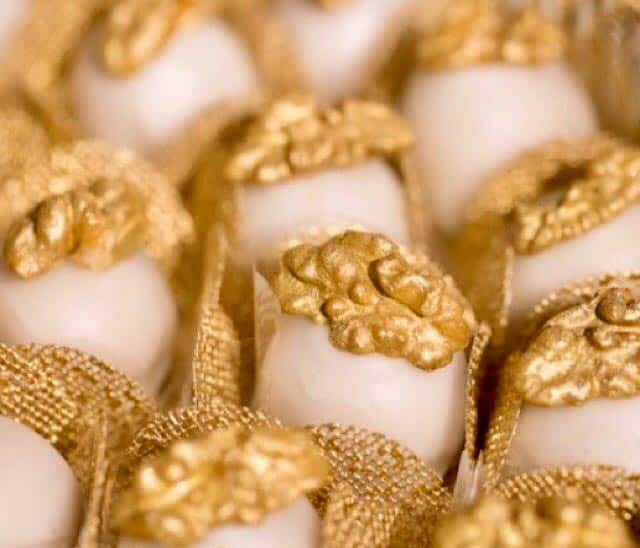
The camafeu filling is prepared with dulce de leche and ground walnuts, achieving a consistency that is firm on the outside and creamy within. The coating features chopped walnuts that envelop the entire surface, creating a crunchy layer that contrasts with the soft interior.
The flavor is distinctive but not aggressive: the sweetness of the dulce de leche is balanced by the natural richness of the walnuts, resulting in a confection that pleases even those who do not have a preference for very sweet treats.
When to Serve
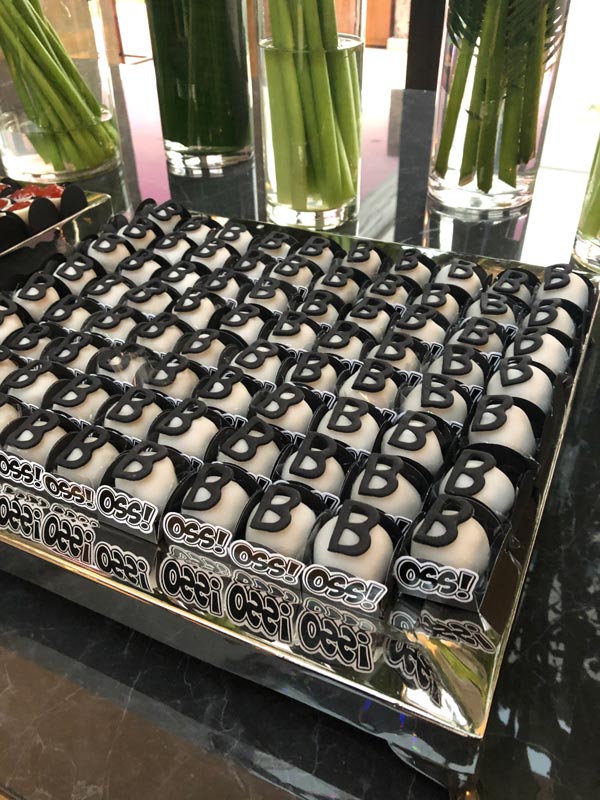
The walnut camafeu shines at celebrations that call for refinement: weddings, anniversaries, baptisms, graduations, and corporate events. On fine sweets tables, it occupies a place of distinction alongside gourmet brigadeiros, bem-casados, and egg wafers.
It can also be served individually in elegant packaging as a party favor — a delicate way to gift guests with flavor and meaning.